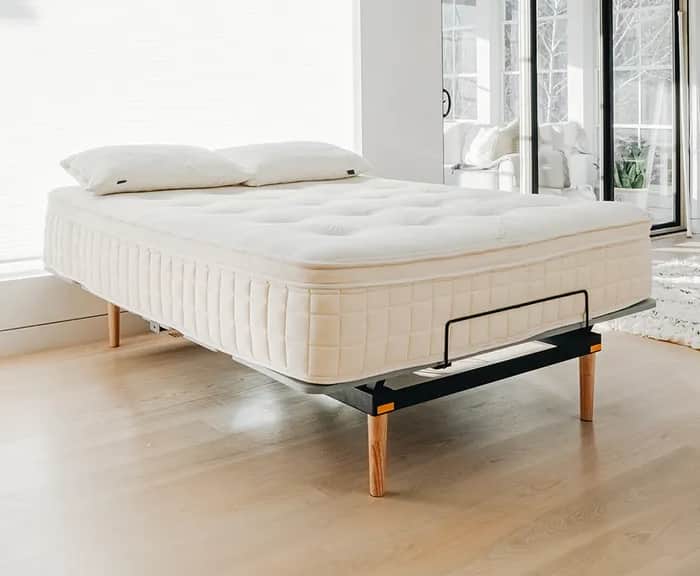
Adjustable Beds • Everyday Comfort
What Makes an Adjustable Bed Base Programmable?
A bed that moves is useful. A bed that remembers how you like it is easier to live with. Programmable positions let you save favorite settings, return to them with a button, and spend less time fine-tuning the remote when all you want is to get comfortable.
Published October 12, 2026
“Programmable” can sound like a big promise for a piece of bedroom furniture. In practice, the idea is simple: instead of raising or lowering the head and foot sections from scratch every time, you can use a built-in preset or save a position that suits you. The base does the remembering; you choose when to use it.
That convenience can make a difference over the course of an ordinary evening. One position might feel comfortable for reading, another might help you settle in for sleep, and a flat setting can bring the mattress back to its level position. The best arrangement depends on the person, the mattress, and the activity—not on a universal “perfect” angle.
Adjustable bed bases vary widely in their controls and capabilities. Some provide a handful of basic movement buttons. Others include labeled presets, programmable memory buttons, independent head and foot adjustment, or extra articulation such as a head tilt or lumbar lift. Understanding those distinctions makes it easier to decide which functions are practical for your routine and which may simply add complexity.
What “programmable” means on an adjustable bed
At its most basic, an adjustable bed base has motors that move sections of the support surface. A remote or app sends commands to those motors. When a base is described as programmable, it generally means that at least some positions can be recalled quickly—either because the manufacturer has set them in advance or because the user can store a preferred arrangement.
A preset is a ready-made position selected by the manufacturer. Common labels include “TV,” “zero gravity,” “anti-snore,” and “flat.” These names describe intended uses or a particular movement pattern, but they are not guarantees of a health result. A preset may be a helpful starting point; comfort is personal, and a label does not replace medical advice.
A memory position is different: the user adjusts the base to a preferred configuration and saves that setting to a designated button. Afterward, pressing that button moves the base back toward the saved position. Depending on the model, memory buttons may store one or several configurations. Check the owner’s instructions to learn exactly how the setting is saved, changed, or cleared.
Presets and memory buttons: two kinds of shortcuts
Think of presets as convenient defaults and memory buttons as personal bookmarks. A TV preset, for example, may raise the head and adjust the foot section to create a lounging position. A flat button returns the base to its neutral configuration. These controls are ready to use without programming anything yourself.
Memory positions are useful when you have already found an arrangement you like. Perhaps you prefer a modest head lift for reading, or you have a repeatable position for winding down. You can adjust the base using the remote, save the position if the model supports that function, and recall it later rather than recreating the angles by trial and error.
There is no requirement to use every preset. Some sleepers rely on one favorite and the flat button; others appreciate having several options for different parts of the day. A simple remote with clearly labeled controls may be more useful than a long feature list if you would rather avoid learning multiple modes.
Why independent adjustment matters
Many adjustable bases let you move the head and foot sections independently. That means you can raise one section without automatically moving the other, then combine the two movements if you prefer. With a programmable base, a saved position can make a familiar combination easier to revisit.
More advanced models may add a head-tilt section or a lumbar adjustment. Those features offer additional ways to change the support surface, but they also bring more controls to understand. Before choosing a base, consider whether you want basic head-and-foot movement or expect to use these extra adjustments regularly.
Couples may also want to think about whether each side can be controlled separately. Split configurations are designed to allow different positions on each side, although the details depend on the setup. Confirm which mattress sizes and configurations the base supports, and whether the controls operate one side or both.
A closer look at The Clean Bedroom’s adjustable bases
The Clean Bedroom’s adjustable base range illustrates how programmability can grow from straightforward movement to a more involved control system. The distinctions are not simply about having more buttons. They concern how much adjustment is available, what can be saved, and which everyday extras are built in.
The Clean Bedroom Level 1 Adjustable Base keeps the emphasis on essential movement: independent head and foot lifts, a wireless remote, and customizable presets. It offers seven head and foot height settings as described in its product information. For someone who wants a saved position without a large collection of added functions, this kind of setup may be easier to approach.
The Level 2 Adjustable Base adds features including massage, under-bed lighting, USB ports, and a remote with preset positions. Its listed remote controls include options such as TV, zero gravity, anti-snore, and flat, plus a customizable memory setting. The additional features may appeal to people who want more than movement alone, while the control layout is worth reviewing before deciding whether the expanded functions suit your habits.
With the Level 3 Adjustable Bed Base, the options include head tilt as well as independent head and foot movement. Its remote information lists several preset positions and customizable memory buttons. This additional articulation can make the base more adaptable for activities such as reading or lounging, but it also makes it useful to take a careful look at the remote and learn what each control does.
The Level 4 Adjustable Bed Base includes independent head and foot adjustment, head tilt, and lumbar lift, along with customizable presets. Listed features also include massage, lighting, and a white-noise or relaxation-audio function. Its product information describes a snore-detection feature that can adjust the bed when enabled. As with any automated feature, it is sensible to read the manufacturer’s instructions and understand how the system behaves before relying on it.
Another example is the Naturepedic Conductor Adjustable Bed Frame. Its product details describe head and foot adjustment, a wireless remote, Bluetooth and app connectivity, a “Go Flat” button, and two memory presets. It also lists a wall-hugging design and adjustable-height solid oak legs. This provides a useful illustration of how a base can combine saved positions with different ways to control it.
How to tell whether the controls will feel easy
A programmable bed should make a routine simpler, not turn bedtime into a technology test. If possible, examine the remote layout before choosing a model. Look for movement buttons that are easy to distinguish, clear labels, and a straightforward way to return the bed to flat. If the base uses an app, consider whether you are comfortable using a phone for a task you may otherwise want to do without one.
It also helps to learn how memory works. On one remote, you might need to hold a memory button after setting the bed; another system may use a different sequence. Do not assume that a preset can be overwritten, that every position can be saved, or that app and remote controls behave identically. The manual is the best source for model-specific instructions.
- Check what is actually saved. Confirm whether the base stores head and foot positions, additional articulation, or only certain adjustments.
- Look for a clear return-to-flat control. A dedicated flat button can be a reassuring shortcut when you want to reset the bed.
- Consider the number of users. Couples may need independent controls or separate saved positions, depending on the bed configuration.
- Match features to your routine. Extra presets are most valuable when they correspond to positions you expect to use.
- Review setup and compatibility. Confirm mattress compatibility, frame placement, electrical access, and the recommended assembly process.
Comfort is personal—even when the position is saved
Saved positions are conveniences, not prescriptions. A position that feels relaxing to one person may not suit someone else. Mattress construction, body proportions, sleeping habits, and individual comfort preferences all influence how an adjustable surface feels. It may take some gentle experimentation to find settings that feel right.
If you are considering an elevated sleeping position to address a health concern, ask a qualified health professional for guidance. Adjustable bases can change posture and support, but product features should not be treated as a diagnosis or a substitute for care. Claims associated with labels such as “anti-snore” or “zero gravity” should be understood as feature names or intended positioning descriptions, not promised outcomes.
Keep the mattress in the picture, too. Not every mattress is designed for every adjustable base, and a base’s range of motion may affect how a mattress bends. Check compatibility with the mattress manufacturer and the base’s documentation before combining them. Also confirm that bedding, protectors, and the existing bed frame can work with the moving platform.
A practical way to test a programmable base
If you can try a model in person, begin with the simplest controls. Raise the head section a little, lower it again, and repeat with the foot section if it moves independently. Then try the flat function and any preset that sounds relevant to your routine. Notice whether the remote is comfortable to hold and whether the movement is easy to follow.
Next, ask how the memory buttons are programmed and whether a saved position can be replaced. Consider the positions you would actually save: a reading posture, a lounging setup, or another arrangement you routinely use. If you cannot name a few likely examples, a basic model may meet your needs just as well as one with a more elaborate menu.
At home, keep the instruction manual accessible until the controls feel familiar. Make changes gradually, especially while learning a new base. If the bed is shared, show the other sleeper how to use the movement and flat buttons, and agree on how saved positions will be set or changed.
The bottom line: useful memory, not magic
A programmable bed base combines powered movement with shortcuts that help you return to preferred positions. Presets provide ready-made options; memory buttons let you save settings of your own. Independent adjustment, extra articulation, app controls, and added features can expand what a base does, but the right level of sophistication is the one that makes daily use feel more comfortable and intuitive.
When comparing adjustable bed bases, start with your routine rather than the longest feature list. Think about who will use the bed, which positions you expect to revisit, how simple you want the remote to be, and whether the mattress and frame are compatible. Those practical questions can reveal whether a straightforward memory function is all you need—or whether additional controls would genuinely earn their place in your bedroom.
Quick takeaway
A programmable adjustable bed base lets you recall preset or user-saved positions. Before choosing one, compare the memory functions, movement options, control layout, compatibility, and features you are likely to use—not just the number of buttons on the remote.